BOTANICAL NO. 08
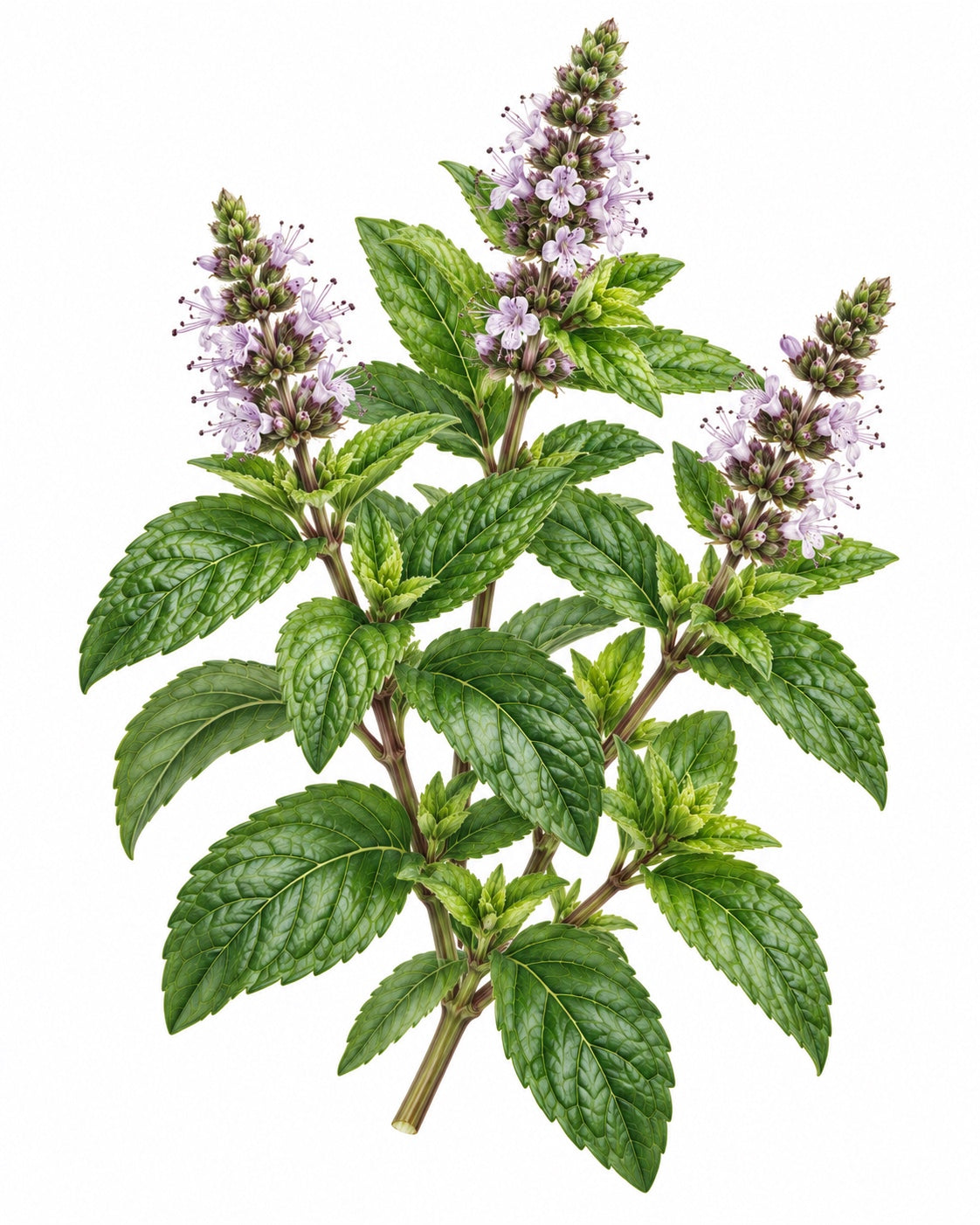
Peppermint
Mentha × piperita
The Plant That Tricks Your Brain Into Feeling Cold
Ever wondered why peppermint makes your mouth feel cool?
Here’s the funny part.
Peppermint doesn’t actually lower the temperature inside your mouth.
Instead, one of its best-known compounds interacts with the sensory receptors responsible for detecting cold.
Your brain gets the message.
And suddenly, everything feels a little fresher.
Pretty clever for a leaf.
A Familiar Herb With an Interesting Family
Peppermint is a naturally occurring hybrid of two mint species: watermint and spearmint.
Like other members of the mint family, it produces fragrant leaves rich in aromatic compounds.
Peppermint has a long history in European herbal traditions, particularly as a carminative and spasmolytic.
A carminative is traditionally used to support digestive comfort, especially when gas or bloating is involved.
A spasmolytic refers to something that helps relax involuntary muscle contractions.
These classifications help explain why peppermint has appeared in digestive herbal preparations for generations.
The Science Behind the Story
Peppermint’s most recognizable compound is menthol.
Menthol activates a sensory receptor called TRPM8, which responds to cool temperatures.
That’s why peppermint can create a cooling sensation without actually changing the temperature of your mouth.
Researchers have also investigated peppermint oil for its effects on smooth-muscle activity, particularly in the digestive tract.
Some clinical research has explored specially formulated peppermint-oil capsules for digestive symptoms.
However, concentrated peppermint oil and peppermint tea are not interchangeable.
The amount of menthol and other compounds delivered depends on the preparation.
A Little Mint Family Trivia: Meet Bo He
Peppermint also has an interesting relative in Traditional Chinese Medicine.
In TCM, Bo He commonly refers to Mentha haplocalyx, a mint traditionally classified as a cool, acrid herb that releases the exterior and disperses wind-heat.
Within that traditional framework, Bo He is used in formulas associated with wind-heat presentations, including certain patterns involving the head, throat, and eyes.
It’s also traditionally described as helping move constrained Liver Qi.
These are concepts from TCM’s traditional diagnostic system, not direct equivalents of modern biomedical diagnoses.
And while Bo He and peppermint belong to the same genus, they’re not necessarily the same botanical species or interchangeable in traditional formulas.
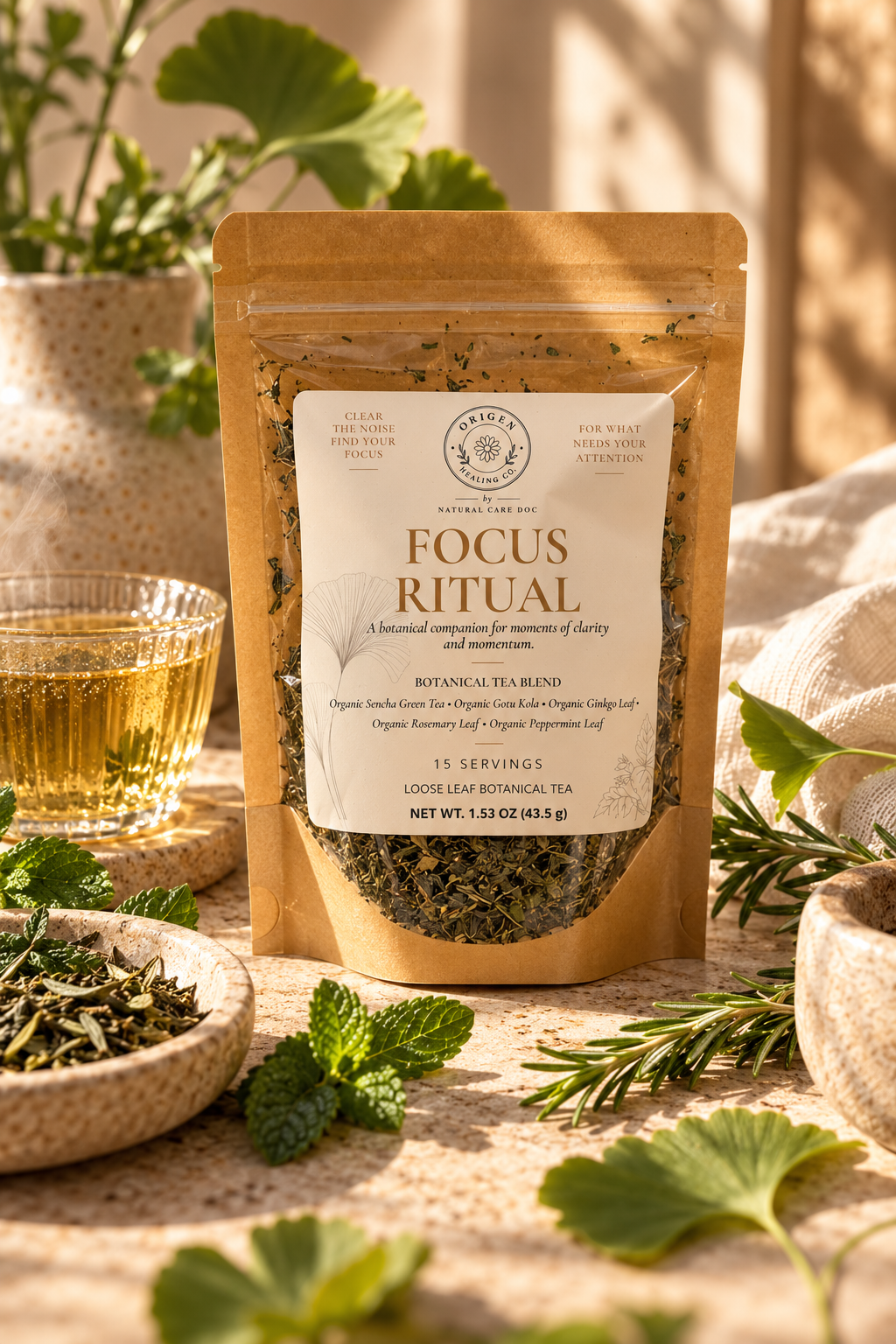
We don’t use peppermint in Focus Ritual for Bo He’s TCM applications.
We just think it’s fascinating how related plants can have different roles across herbal traditions.
Why We Chose It for Focus Ritual
Peppermint’s traditional carminative and spasmolytic classifications contribute to its broader botanical profile.
But in Focus Ritual, its most immediately recognizable contribution is sensory.
Its bright, refreshing aroma and cool flavor create a beautiful contrast with sencha’s grassy character and rosemary’s woody notes.
Sometimes, a botanical’s role in a blend is as much about the experience as its traditional herbal history.
And peppermint certainly knows how to make an entrance.
Experience Peppermint
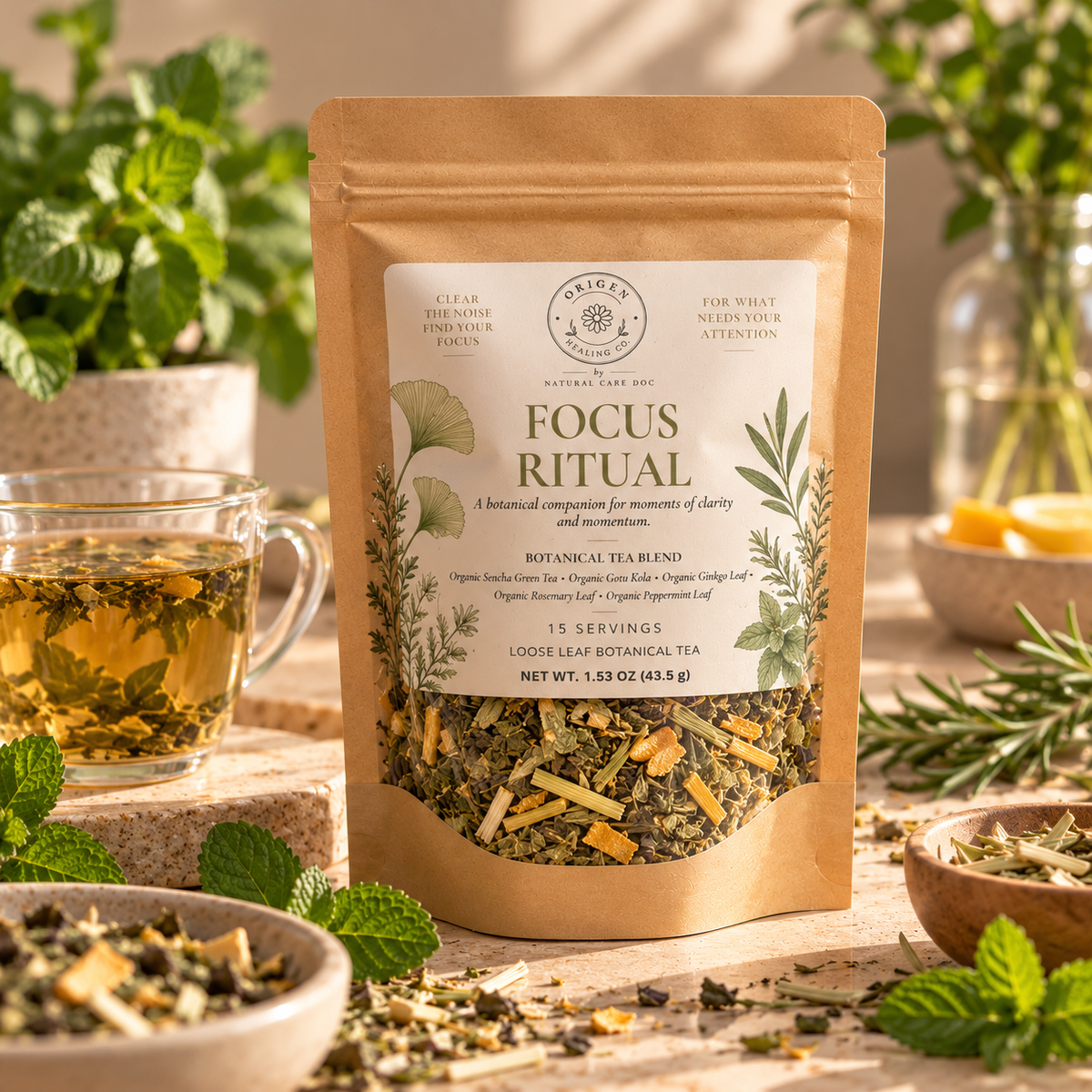
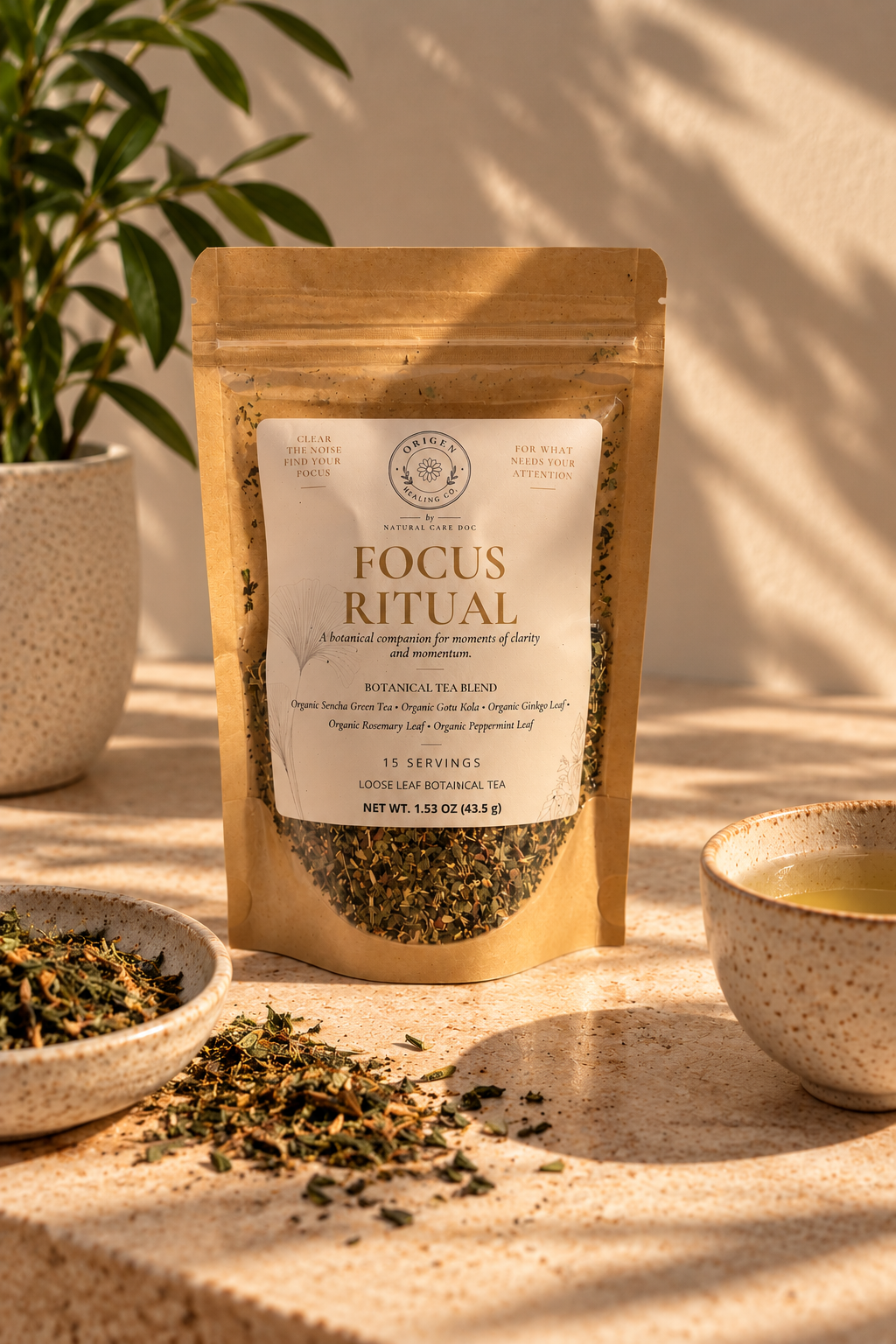
Discover peppermint alongside sencha, gotu kola, rosemary, and ginkgo in Focus Ritual.