BOTANICAL NO. 06
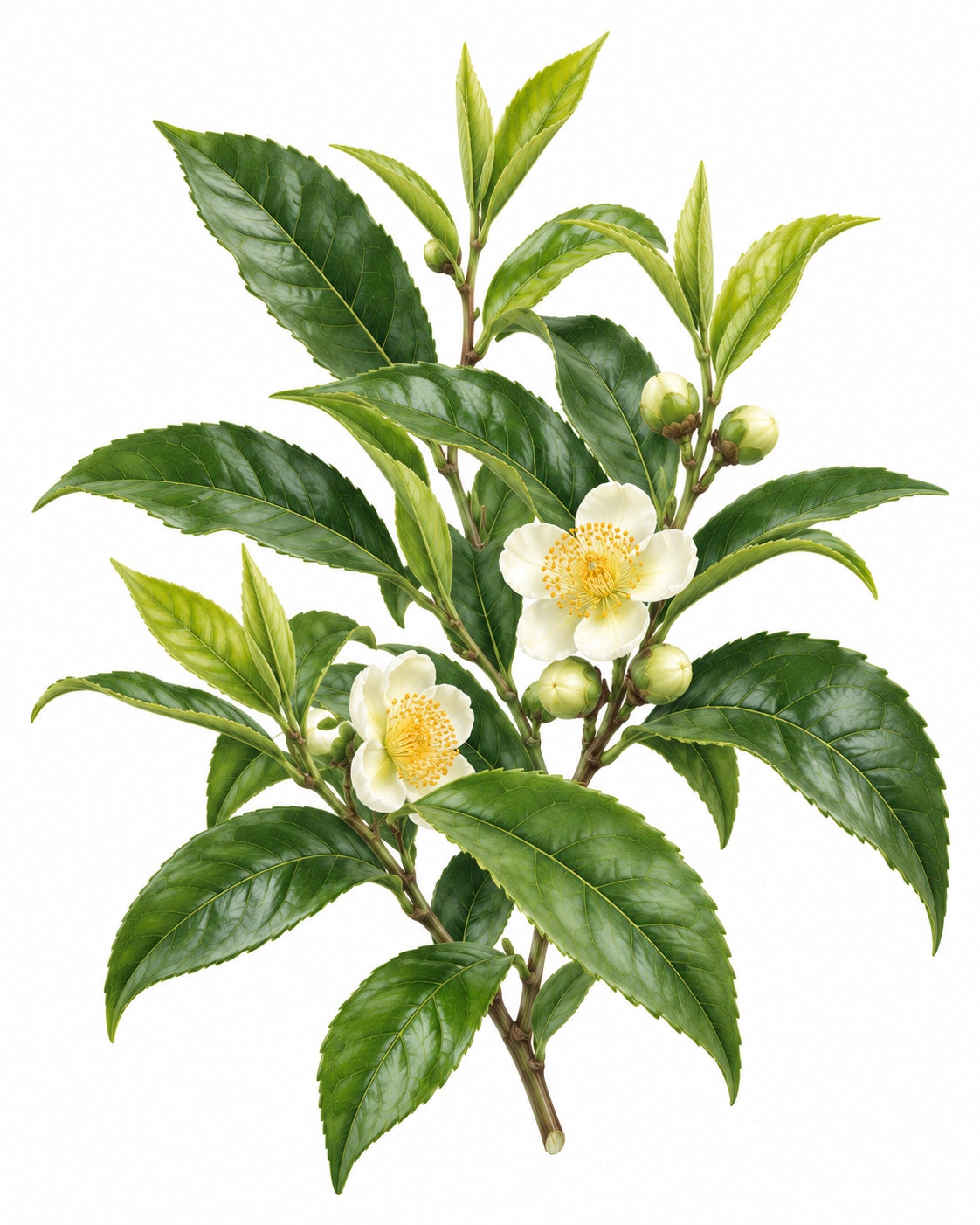
Sencha Green Tea
Camellia sinensis
The Leaf That Knows How to Get Things Started
Some mornings call for a little extra motivation.
And sometimes, that motivation comes in the form of a cup of tea.
Meet sencha.
Fresh, grassy, slightly sweet, and unmistakably green, sencha is one of Japan’s most beloved styles of tea.
But here’s something interesting: sencha isn’t a separate plant species.
Green tea, black tea, white tea, and oolong all come from the same plant: Camellia sinensis.
What makes them different?
How the leaves are processed.
From Tea Leaves to Japanese Tradition
Tea cultivation and preparation have deep roots in China, where tea drinking developed long before the beverage became widespread in Japan.
Over centuries, Japan developed its own tea-growing and preparation traditions.
Sencha became particularly popular for its distinctive steamed-leaf processing, which helps preserve its fresh green character.
Today, sencha is enjoyed both as an everyday beverage and as part of Japanese tea culture.
And behind that familiar cup is some fascinating plant chemistry.
The Science Behind the Story
Green tea naturally contains caffeine, a stimulant that acts on the central nervous system.
Caffeine works primarily by blocking adenosine receptors. Adenosine is a chemical messenger involved in signaling sleepiness, so blocking its receptors can temporarily increase alertness.
Unlike many herbal teas, green tea also contains a meaningful amount of caffeine, although the quantity varies depending on the leaves and brewing method.
Another interesting constituent is L-theanine, an amino acid found in tea.
Researchers have investigated L-theanine in relation to attention, stress-related responses, and its interactions with caffeine.
Green tea is also rich in compounds called catechins, including epigallocatechin gallate, better known as EGCG.
Catechins have attracted scientific interest for their antioxidant properties and interactions with inflammatory signaling.
Antioxidants are compounds that can participate in reactions involving unstable molecules known as free radicals.
However, antioxidant activity observed in a laboratory doesn’t automatically translate into a measurable health benefit from drinking a particular tea.
Why We Chose It for Focus Ritual
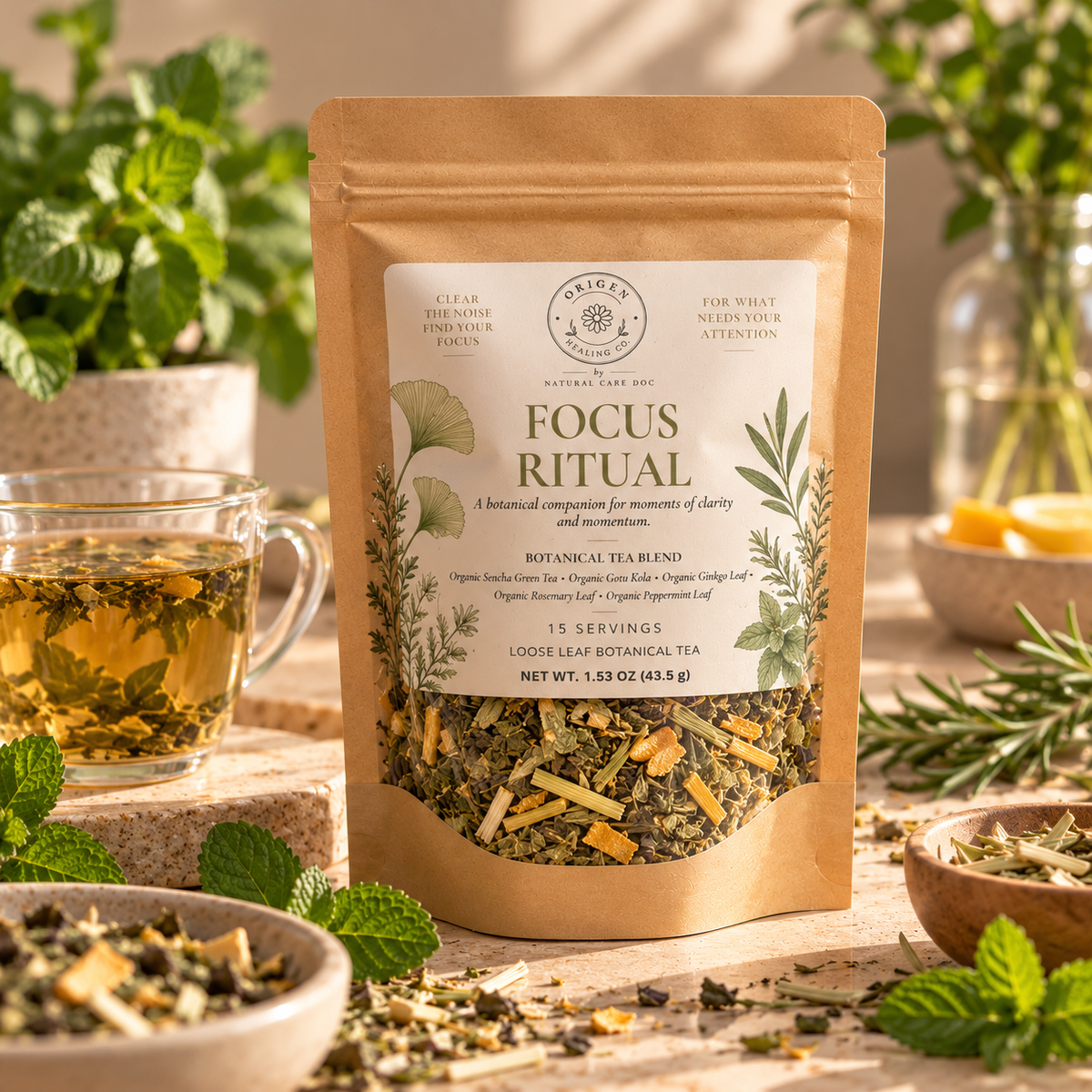
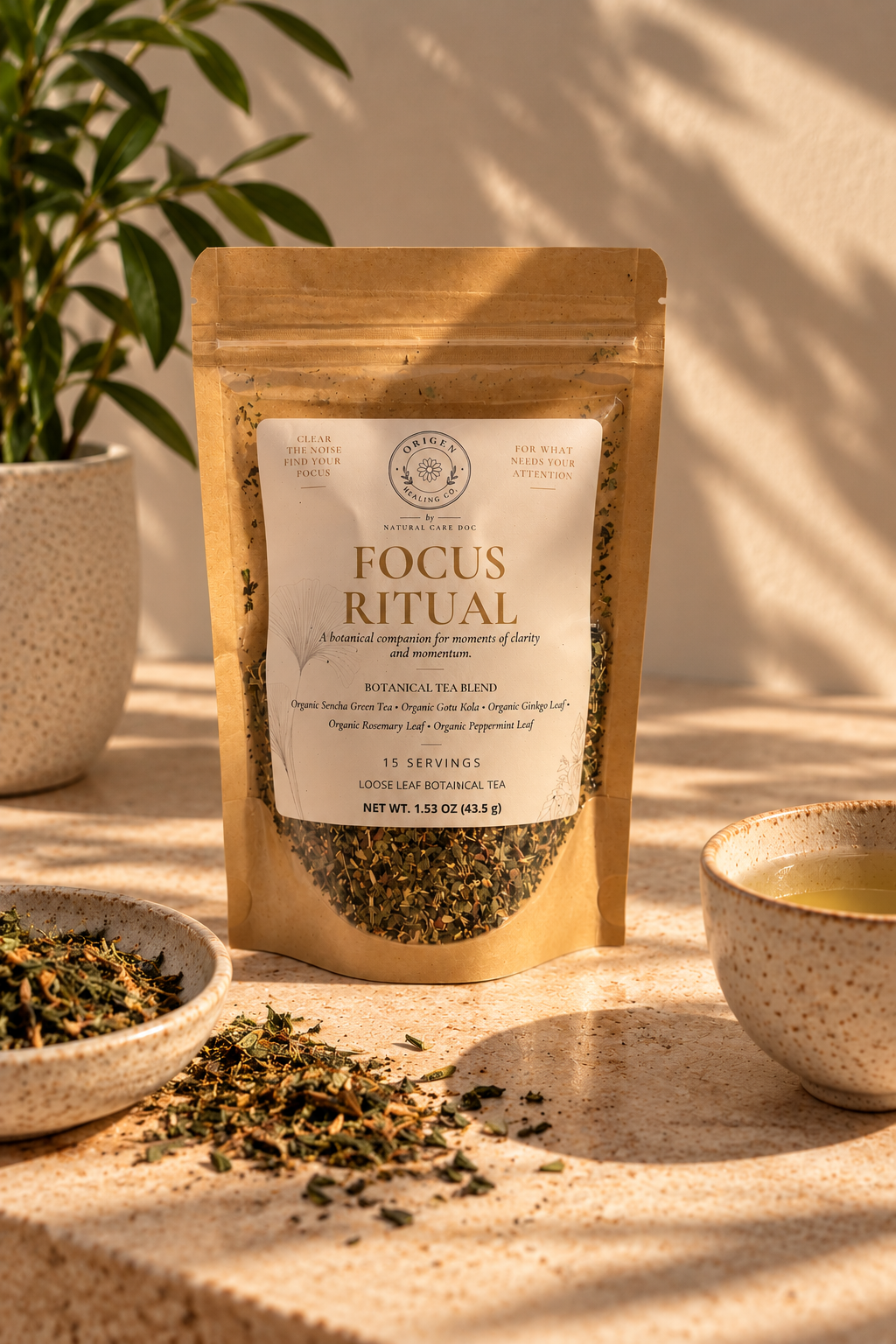
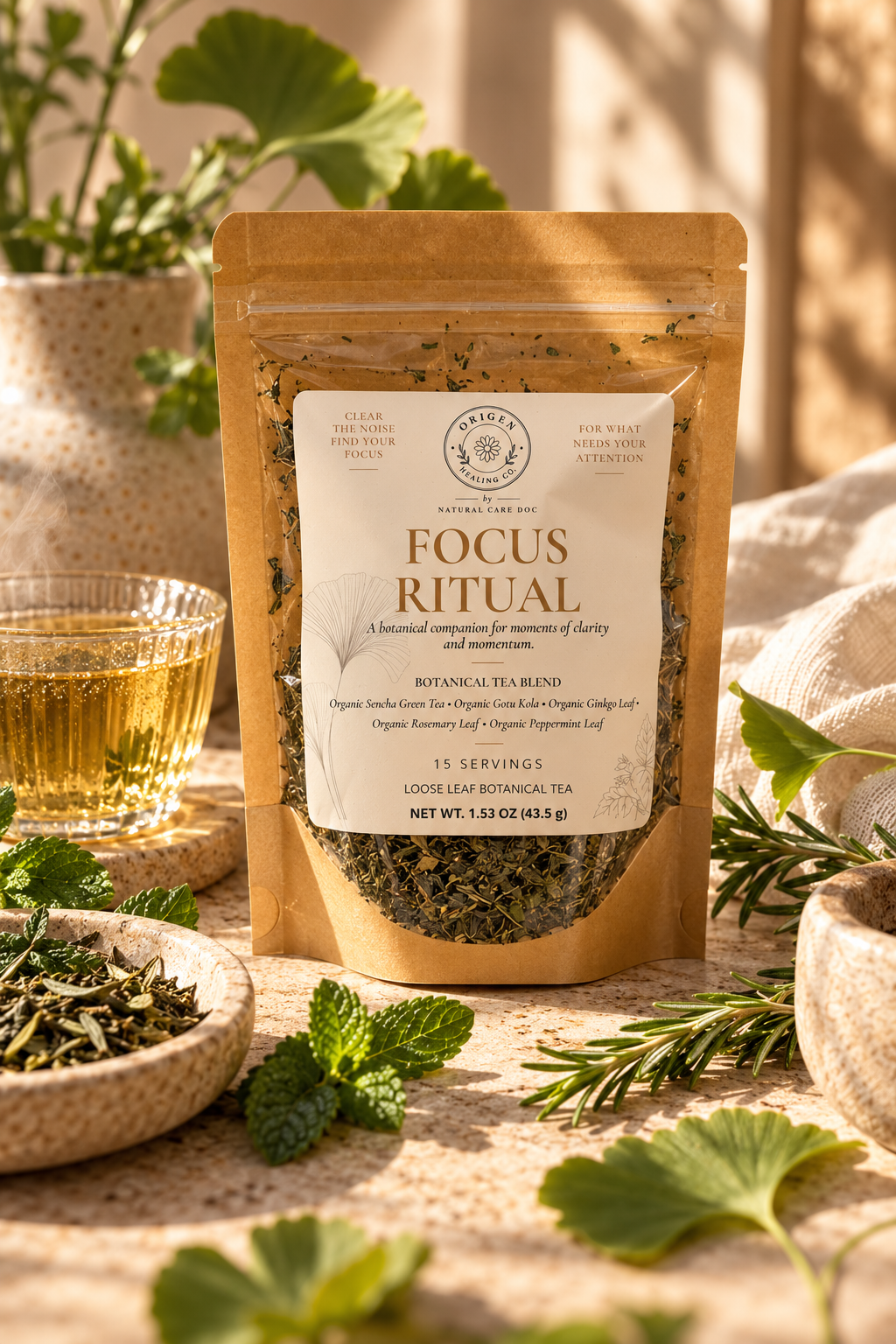
Sencha forms the foundation of Focus Ritual.
Its naturally occurring caffeine provides a familiar source of stimulation, while its catechins and L-theanine contribute to the scientific interest surrounding green tea.
We also love its fresh, grassy flavor, which creates a beautiful base for the other botanicals in the blend.
Sencha brings together something we appreciate at Origen: a beverage with a rich cultural history, interesting chemistry, and a place in everyday life.
Sometimes, the best way to begin a ritual is simply to put the kettle on.
Experience Sencha
Discover sencha alongside gotu kola, rosemary, peppermint, and ginkgo in Focus Ritual.